Thousands of verified reviews across Europe
Every time you fill up, they take a little more. SynGas takes it back.
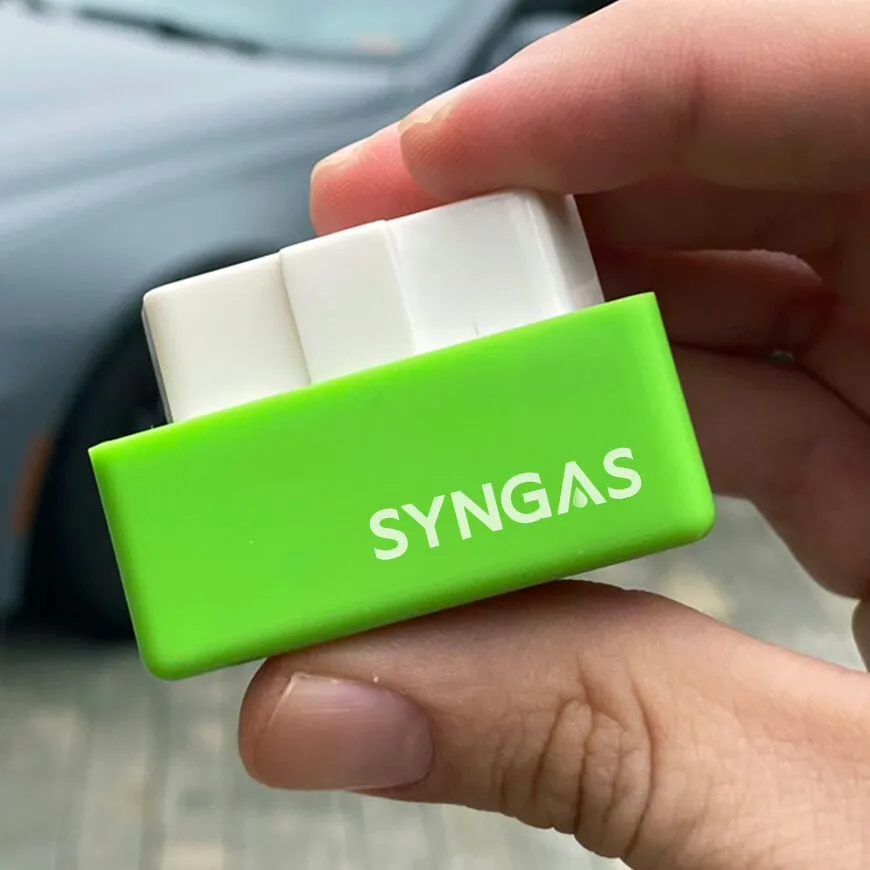
Fuel prices across Europe keep rising — and there's not much you can do about that. But there is something you can do about how much fuel your engine actually burns. SynGas plugs into your car's OBD2 port, connects to your ECU, and starts optimising fuel use on every journey. One small device. Under 60 seconds to install.

You didn't choose rising fuel prices.
But you've been quietly paying them
without any real alternative.
Fuel in Europe is among the most heavily taxed in the world. On top of that, most cars run on ECU settings designed for a generic average — not your routes, your habits, or your vehicle's real current condition. The waste is built in. You've just never had a way to address it.
The price at the pump reflects taxes, geopolitics, and corporate margins — none of which you control. But on top of that, your engine is almost certainly burning more fuel than it needs to, because its factory calibration was never designed around how you specifically drive.
"I tracked it for three months. I was filling up every 8 days like clockwork. Never questioned whether that was avoidable."
A professional remap costs hundreds of euros and is permanent — which matters if you plan to sell the car. Fuel additives are unproven and wear off. Driving slower costs time you don't have. None of these options let you do something meaningful without giving something else up.
"My garage quoted me €380 for a remap. I wasn't comfortable with that — it felt like an irreversible commitment."
As engines accumulate mileage, fuel injection timing drifts from optimal. The ECU compensates, but without recalibration it's working from outdated assumptions. A car that returned 48 mpg when new quietly drops to 41 — and most drivers only notice when they stop and do the maths.
"I only realised when I compared my last 6 months to two years ago. The difference was costing me real money every month."
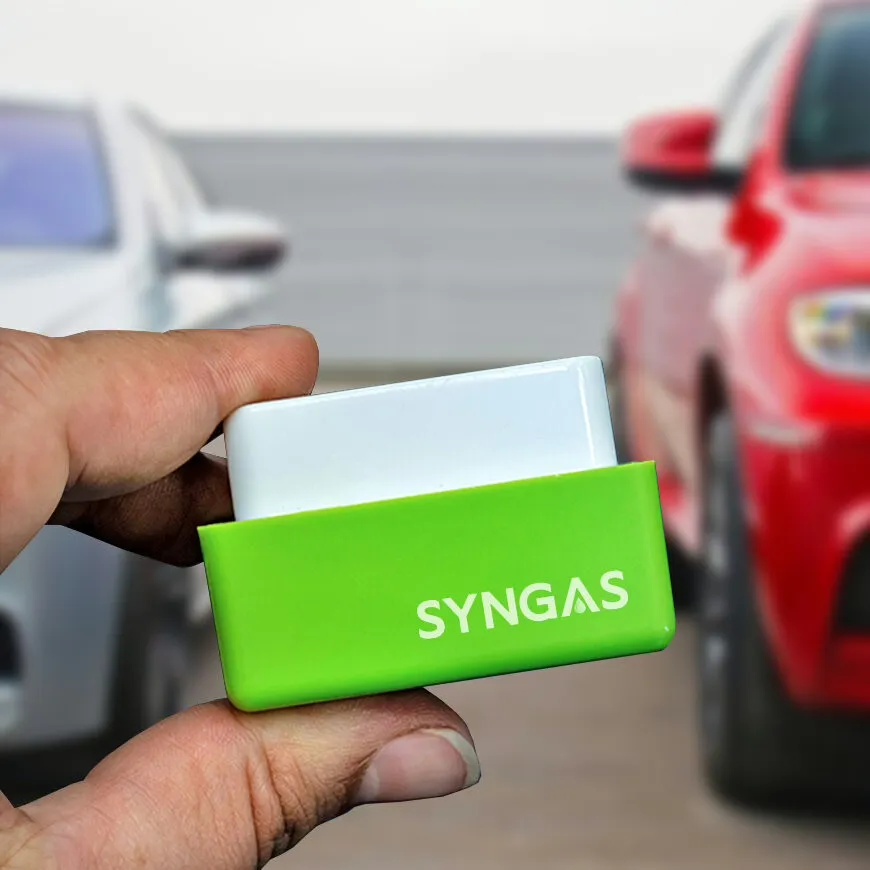
The problem isn't how you drive. It's that your engine's ECU has run on the same generic settings since it left the factory. SynGas connects directly to it and recalibrates it around how you actually drive — without touching anything permanently.
The port has been in your car all along. SynGas just puts it to work for you.
Every car sold in Europe after 2001 is required by law to have a standard OBD2 diagnostic port — the same 16-pin socket your mechanic connects to when reading engine fault codes. It's a direct line to your Engine Control Unit (ECU): the computer that decides, on every engine cycle, exactly how much fuel gets injected.
SynGas plugs into that port and starts reading live engine data immediately. Over the first 150 miles it builds a precise profile of your driving — your speeds, loads, acceleration patterns, and typical routes. It then calibrates fuel injection and timing to match them, reducing the fuel your engine burns without changing how it performs.
Three steps. Under 60 seconds total.
No tools. No app. No mechanic. No technical knowledge needed.
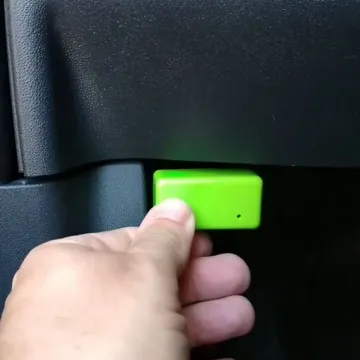
Locate your OBD2 port under the dashboard — typically within arm's reach of the steering wheel. Plug in SynGas. The green LED confirms the connection. That's the entire installation.
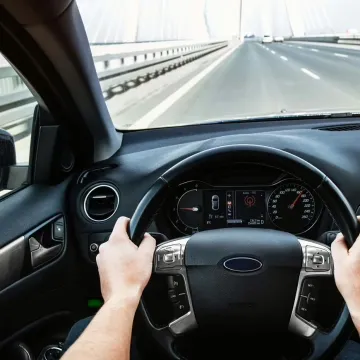
Just drive as you always do. Over the first 150 miles, SynGas reads your engine data and builds a calibration profile specific to your vehicle and habits. No input required from you.
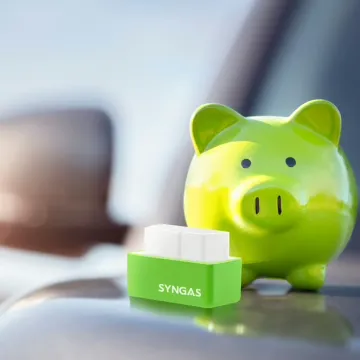
Once calibrated, SynGas continuously fine-tunes fuel injection and timing in real time — helping your engine run at closer to its optimal efficiency on every drive, every day.
Not an additive. Not a magnet.
A real two-way interface with your ECU.
Most "fuel savers" on the market are passive devices — they sit in the OBD2 port, blink a light, and do nothing meaningful. SynGas uses the same bidirectional OBD2 protocol your mechanic uses for diagnostics. That's the difference between a blinking LED and actual engine optimisation.

The EU required OBD2 on all passenger cars from 2001. If your car was built after that year, SynGas connects — petrol, diesel, or hybrid. No adapters, no compatibility guesswork, no exceptions.
✓ Works on all 2001+ EU vehicles
SynGas reads and writes to your ECU in both directions — the same type of interface mechanics use for diagnostics and calibration. Passive devices can only listen. SynGas actively adjusts.
✓ Active optimisation, not passive
SynGas doesn't apply a generic preset. It builds a calibration profile specific to your vehicle, your routes, and your driving style — and continues refining it over time. Results vary by vehicle and driving conditions.
✓ Learns your specific driving
Optimising fuel injection timing means more of the fuel that enters your engine actually combusts cleanly. Less unburnt fuel means less carbon build-up, lower exhaust emissions, and less heat waste over time.
✓ Better burn, less residue
Once plugged in, SynGas is invisible — no cables, no display, no app to open. It runs quietly in the background on every drive without requiring any attention from you.
✓ Plug in, forget about it
More efficient combustion naturally produces fewer unburnt hydrocarbons. Less CO₂ and particulate output per kilometre — relevant as European emissions regulations tighten year on year.
✓ Cleaner exhaust, lower CO₂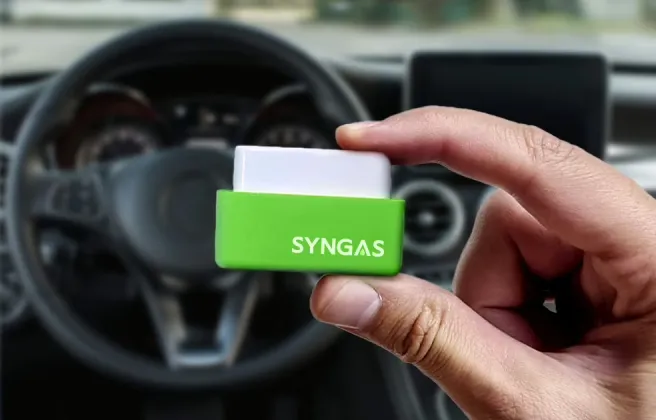
 Verified driver reviews
They were sceptical first.
Then they checked their receipts.
What two types of European drivers found after putting it to the test.
I bought it because it was cheap enough that I wouldn't feel stupid if it didn't work. I've seen these things before — the magnetic ones, the tablets you dissolve in the tank. I assumed this was the same category, just plugged into a different port.
What changed my mind was that it actually uses the diagnostic port. That felt different from the start — it's the same port that my mechanic plugs into. I tracked my fuel receipts for four weeks before and four weeks after. I went from filling up every 8 days to every 11. I still don't fully understand what it's doing under the bonnet, but the numbers don't lie.
I drive 58 km each way to work, five days a week. Fuel is genuinely my biggest monthly expense after rent — I started tracking it on a spreadsheet when it got uncomfortable.
I ran SynGas for six weeks with the same tracking method I always use. My average consumption went from 7.6 L/100 km to around 6.8 L/100 km over that period. At current prices in France that's roughly €28–32 less per month. The device paid for itself in about seven weeks and just keeps going from there. No drama, no transformation — just a quiet, consistent saving I can see in the data.
My main concern before buying was whether plugging something into the OBD port would throw up false fault codes or mess with the car's diagnostics. I'm not a mechanic but I've had enough dashboard lights to know how annoying that gets.
Four months in — no warning lights, nothing unusual on my OBD reader app, no change in how the car behaves. It runs exactly as it always has, just apparently consuming slightly less fuel. I've moved it to my wife's car twice without any issues either. For what it costs and what the guarantee covers, I'd buy it again without hesitation.
I do around 32,000 km a year for work. At those volumes, even a small consistent improvement adds up to real money across 12 months — so I pay attention to this stuff more than the average driver.
The improvement wasn't massive. But it was consistent and it required zero effort from me. I just plugged it in and forgot about it. Seven months later it's still in the car and I have no plans to remove it. For anyone covering high mileage, the maths makes it a very easy decision — especially with a 30-day guarantee that removes any risk from trying it.
Individual results vary depending on vehicle type, age, engine condition, driving habits, and road conditions. Testimonials reflect personal experiences and do not constitute a guarantee of specific fuel savings. Always drive within applicable laws and regulations.

If you don't see a difference — full refund.
Plug SynGas in, drive your normal routes, track your fuel exactly as you already do. If after 30 days you're not satisfied — for any reason — contact support and get your money back in full. No lengthy forms, no hoops, no awkward conversations.

Fuel prices aren't going down.
Your next fill-up isn't free.
Do something about it today.
Every day you drive without SynGas, your ECU is running on settings that were never calibrated for you. One small device. 60 seconds. A 30-day guarantee that means you're risking nothing except finding out sooner that it works.
→ Claim My Discount — Official Site